Free Shipping on Eligible Orders Within the Contiguous U.S.

SPC Flooring and SPC Vinyl Flooring: Rigid Core Buying Guide, Installation, Cost, and Comparisons
SPC flooring, also called SPC vinyl flooring, is a rigid-core vinyl flooring option used by homeowners who want a wood or stone look with click-lock installation and practical everyday maintenance. This VividCozy pillar page explains what SPC flooring means, when it fits, when it does not, and how to compare it with vinyl plank flooring, WPC, laminate, porcelain tile, and peel and stick vinyl flooring.
SPC Flooring Technical Specifications, Thickness & Cost Per Square Foot (2026)
Stone Plastic Composite (SPC) rigid-core flooring combines a 2,000 kg/m³ limestone-polymer core with a 100% waterproof click-lock profile. Unlike standard flexible LVT (1.8 mm–2.5 mm thick), rigid-core SPC planks resist subfloor telegraphing and handle temperature swings from -4°F to 140°F (-20°C to 60°C) when installed with a 1/4-inch (6 mm) perimeter expansion gap over a subfloor flat within 3/16 inch per 10-foot radius (per NWFA and RFCI resilient flooring tolerances).
| Specification Metric | VividCozy Rigid-Core SPC Standard | DIY Peel-and-Stick LVT | Wood-Look Porcelain Tile |
|---|---|---|---|
| Total Plank Thickness | 4.2 mm – 6.0 mm (0.17" – 0.24") | 1.8 mm (0.07") | 10.0 mm (0.39") |
| Plank Dimensions | 7.2" × 48" (183 mm × 1220 mm) | 6" × 36" (152.4 mm × 914.4 mm) | 8" × 47" or 24" × 47" |
| Coverage Per Box | 36.0 sq.ft / box (15 planks, ~49.6 lbs) | 53.8 sq.ft / box (36 planks) | 12.9 – 15.5 sq.ft / box |
| Water Absorption Rate | 0.0% (100% waterproof core) | Water-resistant surface (seam-sensitive) | ≤ 0.5% (impervious per TCNA / ANSI A137.1) |
| Material Cost ($/sq ft) | $3.86 / sq.ft ($139.00 / 36 sq.ft box) | $1.49 / sq.ft ($79.99 / 53.8 sq.ft box) | $9.67 – $16.20 / sq.ft ($209–$249 / box) |
| Top Featured Styles | Modern Ash Gray SPC · Rustic Tawny Oak SPC · Stormy Gray Stone SPC | Washed Oak Peel & Stick | Scandinavian Light Gray Oak Tile |
Quick answer: SPC flooring is a rigid-core vinyl floor with a dense stone-polymer composite core. It is commonly considered for kitchens, living rooms, rental updates, and some bathroom floors when the product instructions allow that use. It is not a shower-floor or wet-room tile assembly, and performance depends on subfloor prep, installation, edge details, and product specifications.
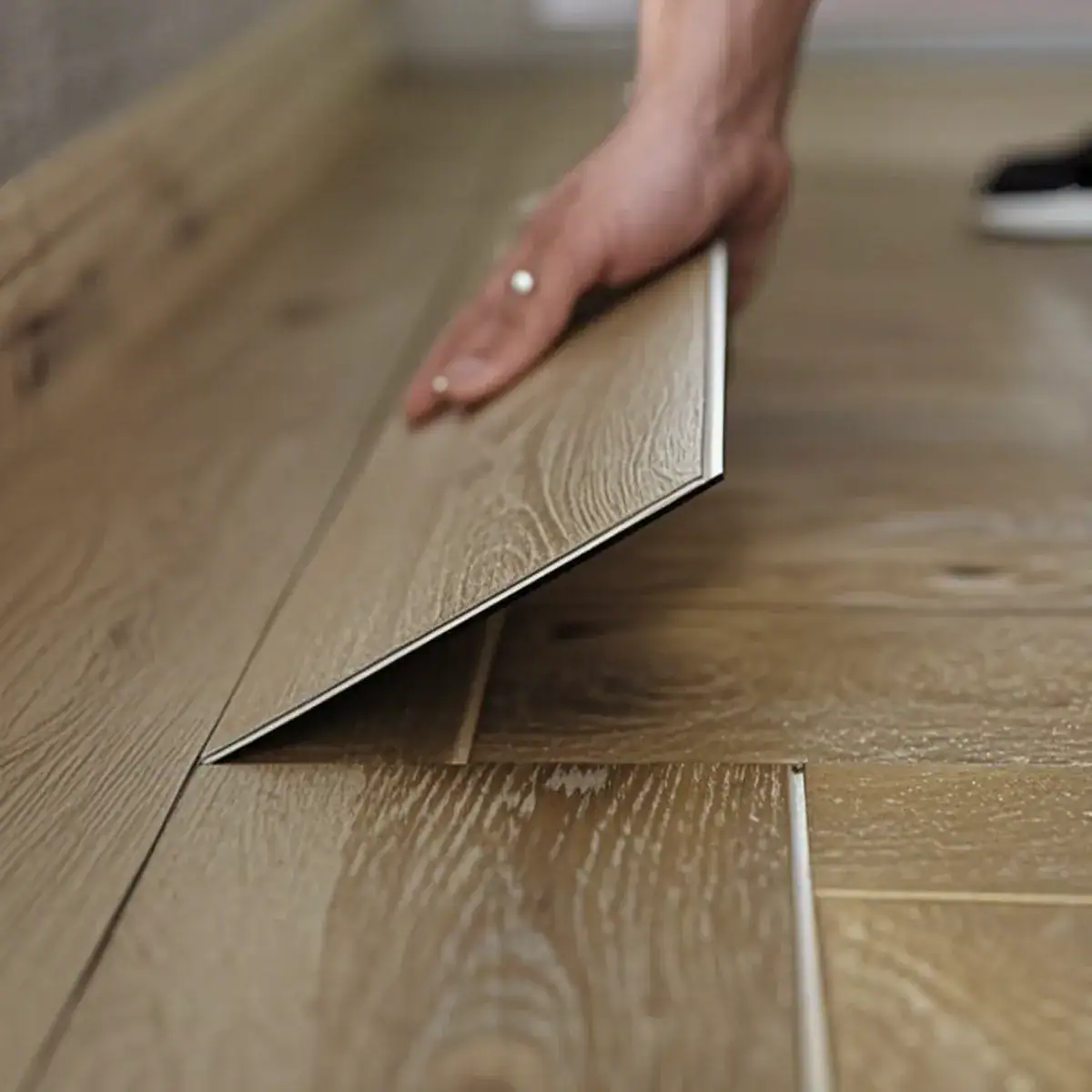
What Is SPC Flooring?
SPC flooring means stone polymer composite or stone plastic composite flooring, depending on how a manufacturer describes the core. In practical buying language, it is a rigid-core vinyl plank or tile with a dense core layer, printed design layer, wear layer, and often a backing or attached pad.
For a deeper definition, read our SPC flooring benefits, limits, and installation basics guide.
| SPC layer | What it does | Buyer note |
|---|---|---|
| Wear layer | Protects the printed surface from routine use | Check product-level wear layer details |
| Design layer | Creates wood, stone, gray, oak, walnut, or tile visuals | Order samples before choosing color |
| Rigid core | Adds density and dimensional stability | Still needs a flat, clean subfloor |
| Backing or pad | May support sound and underfoot feel | Avoid unapproved double-padding |
SPC Flooring Pros and Cons
SPC flooring is popular because it balances design, installation speed, and everyday practicality. It is not the best answer for every room, and it should not be described with blanket promises.
- Pros: rigid-core feel, many wood and stone looks, click-lock options, practical cleaning, and useful performance in many household spaces.
- Cons: it can feel firmer than softer vinyl, needs good subfloor prep, can telegraph major unevenness, and is not a substitute for porcelain tile in shower assemblies.
- Best decision step: compare samples, check installation instructions, confirm room suitability, and plan transitions before ordering.
For the full decision framework, read SPC flooring pros and cons.
SPC Flooring Cost Factors
SPC flooring cost depends on plank quality, wear layer, thickness, attached pad, design realism, shipping method, subfloor preparation, trim, waste factor, installation complexity, and whether old flooring must be removed. Avoid judging by material price alone.
- Measure the room and add a realistic waste allowance based on layout.
- Check whether underlayment or moisture vapor guidance applies.
- Include transition strips, trims, stair pieces, and door undercuts.
- Account for floor leveling or repairs before installation.
- Compare installed cost against porcelain tile, vinyl plank flooring, and laminate.
For detailed planning, use SPC flooring cost and vinyl flooring installation cost.
SPC Flooring Thickness and Wear Layer
SPC flooring thickness in mm should be evaluated with the full product construction, not as a single quality shortcut. A thicker plank may feel more substantial, but the wear layer, locking system, backing, subfloor prep, and installation quality all matter.
Review thickness (4.2 mm–6 mm) and wear-layer specs (12–20 mil) above before choosing between product lines.
SPC Flooring Installation Basics
Many SPC vinyl flooring products use click-lock floating installation, but each product can have its own instructions. Subfloor flatness, moisture checks, expansion gaps, plank acclimation guidance, door clearance, and transition planning affect the final result.
- Clean and inspect the subfloor before installation.
- Follow product instructions for expansion space and room limits.
- Check concrete moisture guidance before installing over slab.
- Do not add extra underlayment unless the product allows it.
- Use careful cuts around door frames, pipes, and transitions.
Use the installation cluster: SPC flooring installation, SPC flooring underlayment, install SPC flooring on concrete, and SPC flooring installation mistakes.
Shop SPC Flooring by Look
SPC flooring can support wood, stone, gray, oak, walnut, beige, and modern neutral interiors. Choose by actual sample appearance in your lighting, not only by digital render.
| Look | Best for | Internal guide |
|---|---|---|
| Wood look SPC flooring | Living rooms, bedrooms, kitchens, open plans | Wood look SPC flooring |
| Stone look SPC flooring | Modern kitchens, entries, utility rooms | Stone look SPC flooring |
| Gray SPC flooring | Contemporary, rental, and low-contrast palettes | Gray SPC flooring |
| Wood look porcelain tile alternative | Showers, wet rooms, permanent tile surfaces | Wood look porcelain tile |
SPC Flooring Comparisons
SPC flooring should sit inside a broader flooring decision, not in isolation. The right choice depends on room moisture, budget, comfort, substrate, installation tolerance, and whether the surface is a true shower/wet-area assembly.
| Comparison | Use this when | Guide |
|---|---|---|
| SPC vs LVP flooring | You are choosing between rigid core and flexible/standard vinyl plank | SPC vs LVP flooring |
| SPC vs WPC flooring | You are comparing dense rigid core with softer-core vinyl | SPC vs WPC flooring |
| SPC vs laminate flooring | You want wood visuals but need to compare moisture and core differences | SPC vs laminate flooring |
| SPC vs porcelain tile | You are comparing bathroom floors, kitchens, or long-term tile projects | SPC vs porcelain tile |
| Wood look SPC vs porcelain tile | You want wood aesthetics but are unsure between vinyl and tile | Wood look SPC vs wood look porcelain tile |
SPC Flooring by Room
SPC flooring may fit kitchens, living rooms, bedrooms, basements, rental updates, and some bathrooms when product instructions and site conditions support the use. In showers and wet rooms, use porcelain tile systems rather than SPC flooring.
- Kitchens: plan cabinet clearances, transitions, and appliance movement.
- Bathrooms: use only outside the shower and follow product moisture guidance.
- Basements: check concrete moisture guidance first.
- Rentals: compare SPC with peel and stick vinyl based on lease rules and removability needs.
- Commercial spaces: check product ratings, traffic expectations, and maintenance needs.
If the project is a bathroom, also read best waterproof flooring for bathrooms.
How SPC Connects to Peel and Stick Vinyl and Porcelain Tile
SPC flooring and peel and stick vinyl flooring often serve different buyer needs. SPC is usually chosen for a more substantial floating floor feel, while peel and stick vinyl is often considered for faster, lower-commitment updates on suitable substrates. Porcelain tile remains the stronger path for showers, wet tile assemblies, and permanent tile design.
Continue through the related hubs: peel and stick vinyl flooring, vinyl plank flooring, laminate vs vinyl flooring, and wood look tile vs vinyl plank.
Related VividCozy SPC Guides
- SPC flooring buying guide
- Shop SPC flooring by look
- Flooring area and box calculator
- How to clean SPC flooring
- Request flooring samples
FAQ: SPC Flooring
What is SPC flooring?
SPC flooring is a rigid-core vinyl flooring product with a dense stone-polymer or stone-plastic composite core, a printed design layer, a wear layer, and often a backing or attached pad.
Is SPC flooring the same as vinyl flooring?
SPC is a type of vinyl flooring, but not all vinyl flooring is SPC. SPC usually refers to a rigid-core construction, while vinyl flooring can include several product formats.
Is SPC flooring good for bathrooms?
SPC flooring may be suitable for bathroom floors outside the shower when the specific product allows bathroom use and the installation details are handled correctly. It is not a shower floor or wet-room tile system.
Do you need underlayment for SPC flooring?
Some SPC flooring includes attached pad, while some products may require or allow specific underlayment. Follow the product instructions and avoid unapproved double-padding.
Can SPC flooring go over concrete?
Many SPC floors can be installed over properly prepared concrete, but moisture guidance, flatness, cleanliness, and manufacturer instructions must be checked first.
Is SPC flooring better than laminate?
It depends on the room and buyer priorities. SPC is often chosen for rigid-core vinyl performance and moisture-practical rooms, while laminate may appeal for different feel, price, or style reasons. Compare both with product specifications.
Is SPC flooring better than porcelain tile?
SPC can be faster and warmer underfoot for many floors. Porcelain tile is still the better fit for shower assemblies, wet rooms, and many permanent tile projects.
How do you clean SPC flooring?
Sweep or vacuum regularly, wipe spills promptly, and use a cleaner allowed by the product instructions. Avoid harsh methods that the manufacturer does not approve.
Next Step
Start with samples, compare SPC with porcelain tile and peel and stick vinyl based on the exact room, and use the installation and comparison guides above before final ordering.