
5 Inspiring Ways on How to Choose Flooring

How to choose flooring based on your lifestyle, space, and design preferences, and this practical guide will walk you through it. Choosing the right flooring can feel overwhelming with so many options available. Whether you need a reliable basement flooring solution, durable pet-friendly flooring, or simply need help to choose a flooring color that complements your home, our expert flooring selection guide from everyday needs to technical details has you covered. Make informed decisions and find the perfect floor for every room.
For quick answers to common questions, be sure to explore our FAQ section dedicated to flooring selection. There, you’ll find real customer concerns and expert answers to help you make decisions faster and with confidence. We also recommend using our free design consultation or reading the full article below — it covers key lifestyle factors, usage scenarios, technical details, and cost considerations to guide you through the process in more depth.
How to Choose Flooring 1: Start with Your Space and Lifestyle
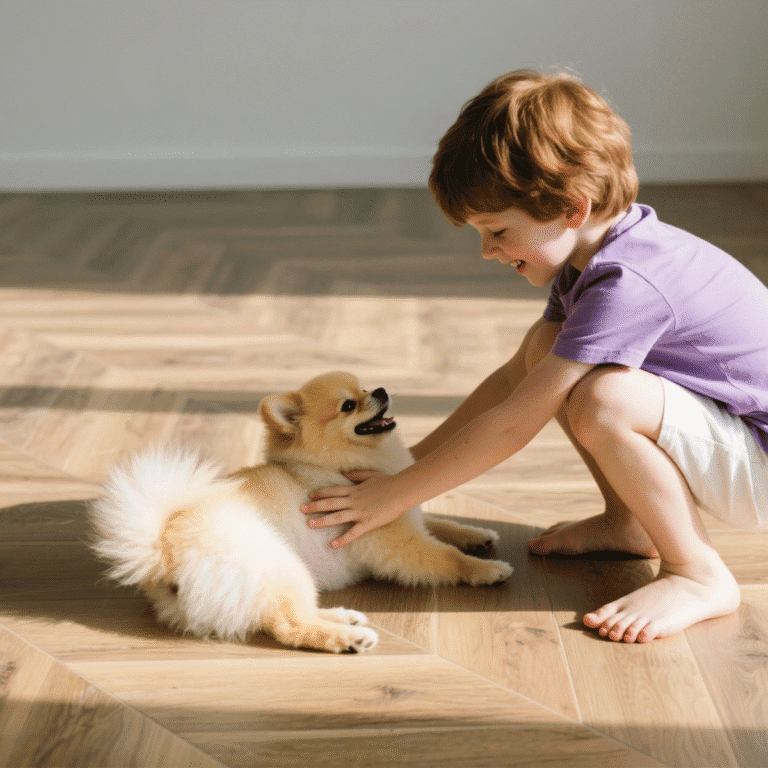
When living with kids, pets, or elderly family members, knowing how to choose flooring is essential for safety and durability. From scratch-resistant tiles to slip-proof surfaces, this guide compares practical options to help protect your home and loved ones.
1. Homes with Children and Pets:
The Need for Impact Resistance and Waterproofing
Key Considerations:
Pet claws applying over 200 psi of pressure
Toys being dropped, generating impact energy over 5 Joules
Frequent liquid spills, typically 3 to 5 times per day
Data from the University of Texas shows floors in pet-owning households experience 47% more surface damage compared to pet-free homes.
Recommended Material Options:
✅ Full-Body Porcelain Wood-Look Tile
Fired at 1,180°C for high durability
Density: 2.3 g/cm³, Mohs hardness rating over 6, impact strength of 12 MPa
Realistic surface texture: Achieved through digital printing and press-mold glazing, with 92% visual fidelity to natural wood
✅ Rigid Core SPC Flooring
Three-layer structure:
0.5mm polyurethane wear layer (certified 5,000+ abrasion cycles, EN 14041 standard)
76.5% high-density calcium carbonate core (Shore hardness 90A)
Fiberglass reinforcement layer (dimensional stability with ≤0.3% expansion under temperature changes)
Waterproof performance: ≤0.32% water absorption (ASTM D570)
Stain resistance: Liquids like ketchup or pet urine can be wiped clean within 2 hours without leaving marks
Comparative Data to Avoid Common Pitfalls:
Metric | SPC Flooring | Wood-Look Tile | Soft PVC Flooring |
|---|---|---|---|
Scratch Resistance | No marks at 3,000N pressure | Slight marks at 2,500N | Penetration at 1,500N |
Waterproof Duration | No expansion after 48h | No penetration after 72h | Joint seepage after 12h |
2. Homes with Elderly Residents: Balancing Slip Resistance and Comfort
Safety Standards Reference:
OSHA guidelines: Dynamic slip coefficient ≥ 0.42 reduces fall risk by 50%
Florida senior living community studies: Anti-slip flooring reduces fall-related injuries by 37%
Material Comparison:
✅ Cork-Backed Luxury Vinyl Tile (LVT)
Cushion layer: 5mm natural cork + 2mm IXPE foam, absorbs 65% of impact force (standard flooring absorbs ~32%)
Sound insulation: Reduces impact noise by 28dB (ISO 140-8 certified)
✅ Anti-Slip SPC Flooring
Nano-textured surface (roughness Ra = 1.6μm)
Wet slip coefficient: 0.51 (ASTM C1028 standard)
Precision joint system: Height variation between planks ≤ 0.3mm, reducing trip hazards (typical flooring joint variation is ~0.8mm)
Accident Risk Comparison:
Flooring Type | Wet Slip Coefficient | Joint Height Difference | Relative Fall Risk |
|---|---|---|---|
Glossy Wood-Look Tile | 0.35 | 1.2mm | 2.1x higher than anti-slip flooring |
Standard SPC | 0.48 | 0.5mm | 32% lower |
How to Choose Flooring 2: by Space & Key Technical Considerations
When it comes to creating a comfortable, practical home, knowing how to choose flooring is essential. From waterproofing and durability for kitchens and bathrooms to acoustic comfort and visual appeal in living spaces, the right flooring makes all the difference. This guide compares wood-look tiles, SPC flooring, and LVT with memory foam—helping you select the ideal solution for every room.
1. Kitchens & Bathrooms: Waterproofing and Stain Resistance
SPC Flooring Installation Standards:
Subfloor Preparation:
Flatness: ≤ 3/16 inch deviation over 10 feet (checked with straightedge)
Uneven areas filled with Portland cement (compressive strength ≥ 3,000 psi)
Moisture Management:
Concrete subfloor relative humidity ≤ 85% (verified with RH meter)
If exceeded, install 6mil polyethylene moisture barrier
Installation Method:
Click-lock joints inserted at a 15° angle, assembly time ~45 seconds per plank
Edge treatment: Silicone sealant (GE Silicone II or equivalent mildew-resistant product)
1/4 inch expansion gaps maintained along walls and corners
Porcelain Tile Installation Essentials:
Adhesive and Grout:
Tile adhesive: C2TES1 grade per EN 12004, bond strength ≥ 1.5 MPa
Grout: Epoxy-sand compound with Shore hardness 75A, ISO 105-X12 stain resistance rating of 5
Acceptance Standards:
Hollow area ≤ 3% (checked by tapping with rubber mallet)
Grout joint height variation ≤ 0.5mm (checked with feeler gauge)
Total Cost Comparison (Based on 100 sq. ft area):
Cost Item | SPC Flooring | Wood-Look Tile |
|---|---|---|
Material Cost | $500 – $800 | $800 – $1,200 |
Labor Cost | DIY ($0) | $400 – $600 |
5-Year Maintenance | $60 | $150 |
2. Living Rooms & Bedrooms: Comfort, Acoustics, and Visual Appeal
Acoustic Solutions for Living Rooms:
✅ Wood-Look Tile Design Features
Herringbone pattern installation (18% material waste, 40% visual enhancement over standard straight-lay, 35% more labor-intensive)
Matte glaze finish (gloss level 25±5GU), superior anti-glare compared to high-gloss tiles (70GU)
✅ SPC Flooring with IXPE Underlayment
1.5mm IXPE foam pad, NRC rating of 0.45
Footstep noise reduction: 21dB
Aesthetic enhancement: Laid at 45° angle to natural light source, creating a 23% increase in perceived space
Comfort System for Bedrooms:
✅ Self-Adhesive LVT with Memory Foam
Multi-layer structure: 3mm PVC + 2mm memory foam
Thermal insulation: Heat transfer rate 0.08W/m·K (surface temperature ~4°C warmer than tile)
Installation efficiency: 2 workers can complete 100 sq. ft in 4 hours (50% faster than SPC)
Acoustic and Comfort Comparison:
Flooring System | Impact Noise (dB) | Thermal Insulation (R-Value) | Barefoot Comfort |
|---|---|---|---|
LVT + Memory Foam | 48 | R = 0.12 | Excellent |
SPC + IXPE | 55 | R = 0.09 | Good |
How to Choose Flooring 3: Moisture Resistance and Durability Considerations for Basement Flooring
Choosing the right basement flooring can be tricky. This quick guide shows you how to choose flooring that resists moisture and fits your budget. Compare SPC, vinyl plank, and porcelain tile to find the best solution for your space.
1. Recommended Materials for Basement Applications
✅ Porcelain Tile (With Waterproof Membrane)
Essential for basements with flooding risk
Waterproofing: Combination of C2TES1 adhesive and liquid waterproof membrane (≥ 2.0mm dry film thickness)
Drainage slope requirement: Minimum 1% slope for wet areas
✅ SPC Rigid Core Flooring with Moisture Barrier Backing
Waterproof Performance: ≤ 0.32% water absorption (ASTM D570)
Dimensional Stability: Expansion rate ≤ 0.3% after 48-hour humidity exposure
Suitable for direct installation over concrete subfloors
✅ Click-Lock Vinyl Plank Flooring
Affordable and DIY-friendly
Impact resistance superior to standard laminate flooring
Recommended with 6mil polyethylene vapor barrier for enhanced moisture protection
2. Cost and Practicality Comparison for Basement Flooring
Flooring Type | Material Cost (per 100 sq.ft) | Installation Difficulty | Waterproof Reliability |
|---|---|---|---|
SPC Rigid Core Flooring | $500 – $800 | Easy (DIY possible) | Good |
Vinyl Plank Flooring | $300 – $500 | Very Easy (DIY friendly) | Moderate |
Porcelain Tile (Full Waterproof System) | $1,200 – $1,800 | Complex (Professional) | Excellent |
How to Choose Flooring 4: Technical Standards for Flooring Installation
1. Subfloor Flatness and Moisture Requirements
Flatness Standard: ≤ 3/16 inch deviation over 10 linear feet
Recommended Correction Material: Portland cement-based self-leveling compound (compressive strength ≥ 3,000 psi)
Moisture Content:
Concrete subfloor ≤ 85% relative humidity (RH meter)
Wood subfloor ≤ 14% moisture content
2. Expansion Gap Guidelines
Perimeter Gaps: 1/4 inch gap around walls, columns, and fixed objects
Transition Gaps: Maintain appropriate joints between different flooring types
Sealant Recommendation: Neutral cure silicone for waterproof areas
3. Joint and Layout Considerations
Minimum Offset Between Adjacent Joints: 6 inches
Joint Height Difference: ≤ 0.3mm for SPC and LVT flooring
Diagonal Installation:
Visual space enhancement of ~23%
Material waste increases by ~18%
Labor time increases by ~35%
How to Choose Flooring 5: Comprehensive Comparison of Common Flooring Types
Flooring Type | Waterproof | Scratch Resistance | Comfort | Installation | Maintenance | Price Level |
|---|---|---|---|---|---|---|
SPC Rigid Core Flooring | Excellent | Excellent | Good | Easy (DIY) | Low | $$ |
Vinyl Plank Flooring | Good | Moderate | Moderate | Very Easy (DIY) | Low | $ |
Porcelain Tile | Excellent | Excellent | Cold | Complex (Pro) | Moderate | $$$ |
Engineered Hardwood | Moderate | Good | Excellent | Complex (Pro) | Moderate | $$$$ |
Laminate Flooring | Poor | Moderate | Moderate | Easy (DIY) | Moderate | $ |
Carpet | Poor | Poor | Excellent | Complex (Pro) | Difficult | $$ |
Conclusion: Choosing Flooring with Confidence
Conclusion: Choosing Flooring with Confidence
Flooring selection is not just a matter of appearance—it significantly impacts comfort, durability, safety, and maintenance costs. By understanding your lifestyle needs, space-specific requirements, and the technical characteristics of various materials, you can make an informed decision that balances performance, budget, and aesthetics.
Practical Recommendations:
✔ For homes with pets and children: Prioritize scratch-resistant and waterproof flooring like SPC or tile
✔ For elderly residents: Focus on slip resistance and comfortable underfoot feel
✔ For basements: Waterproof reliability and subfloor moisture control are critical
✔ For DIY enthusiasts: Click-lock SPC or vinyl plank flooring offers excellent value and ease of installation
✔ For long-term durability: Porcelain tile and engineered hardwood provide premium performance at a higher upfront cost
If you’re still unsure which flooring is right for your home, or if you have specific needs or concerns, feel free to contact VividCozy for a free design consultation. Our team will provide personalized recommendations based on your space and lifestyle.